“grow in” search results (22000)
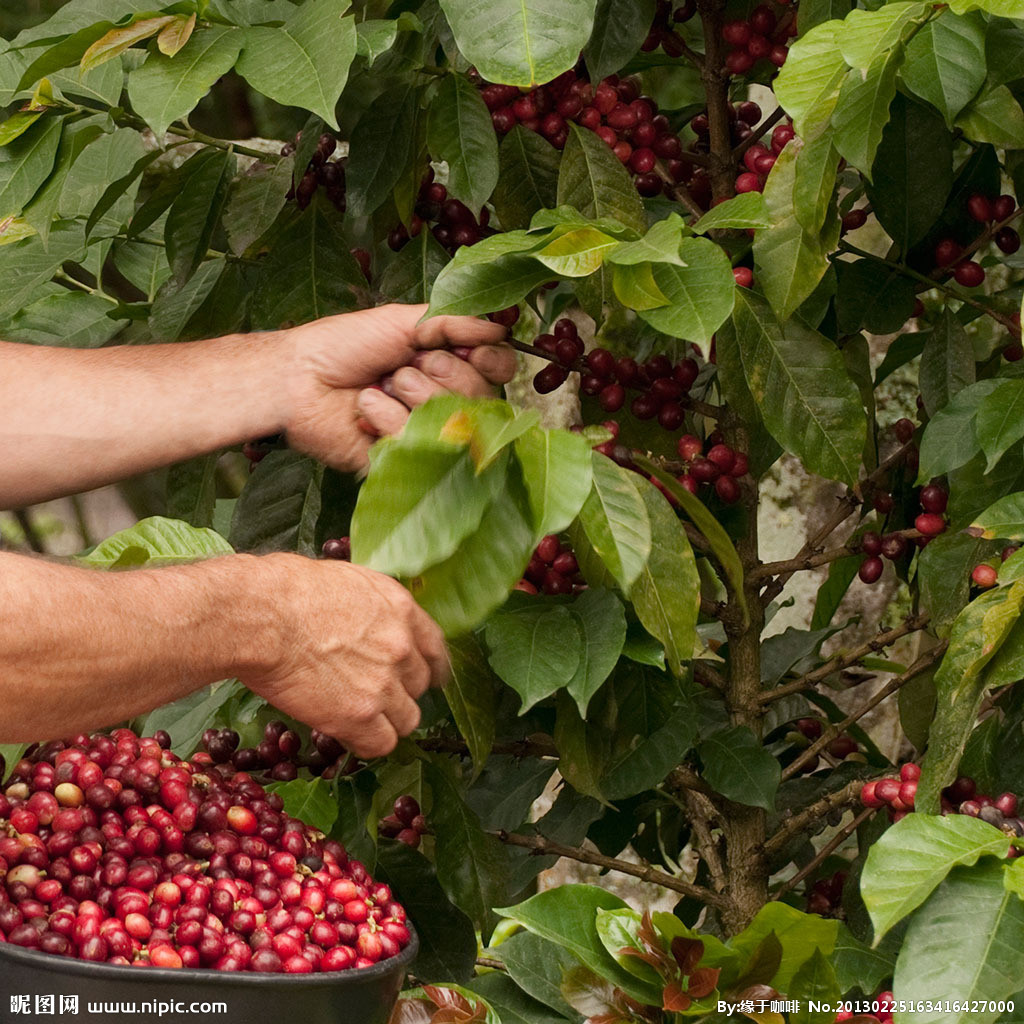
How do coffee beans grow? what conditions do you need to grow coffee trees?
Coffee is a perennial evergreen shrub or small tree of Rubiaceae. It is a horticultural perennial cash crop with the characteristics of fast growth, high yield, high value and wide market. Wild coffee trees can grow to a height of 5 to 10 meters, but coffee trees planted on the manor are often cut to a height of less than 2 meters in order to increase the amount of fruit and facilitate harvesting. The opposite leaves of coffee trees are long oval.
2016-03-15 Coffee beans grow coffee need what conditions
Coffee can't grow without light and shade.
Coffee can not grow without adequate light and, of course, a shady backlight area.
2014-07-15 Coffee knowledge Coffee growth Coffee Encyclopedia
The knowledge of growing coffee explains how to grow coffee beans
Coffee seeds cannot be grown directly with coffee fruits picked from coffee trees. Peeling coffee fruits is like planting peanuts. If you plant a peanut with a shell in the soil, it cannot sprout. You must plant peanuts. It is the same with medium coffee. If you have coffee fruit in your hand, you can first bask it in the sun and shake it until it is shaken inside.
2014-11-05 Coffee knowledge coffee tree planting coffee beans
Boutique coffee Kona beans growing on the slopes of volcanoes
The quality of the fine Kona coffee in the growing environment is suitable for the suitable geographical location and climate. Coffee trees grow on the slopes of volcanoes, and their geographical location ensures the altitude needed for coffee to grow; the dark volcanic ash soil provides the necessary minerals for coffee. This is probably due to the fact that Kona Island is rich in volcanic black mud with moderate acidity, rich mineral content and water content.
2016-06-16 Growth volcano hillside boutique coffee Kona coffee beans growth environment fine
Introduction to the growing environment of Ethiopian coffee
Ethiopian coffee beans grow in close to the natural environment, after years of planting under the same growth conditions, Ethiopian coffee beans have gradually adapted to the environment here. More than 60% of coffee beans are grown in forests or semi-forests. Large-scale coffee-growing villages account for about 35% of the country's total coffee production. Many of these are used.
2016-06-15 Ethiopia coffee growth environment introduction coffee beans grow in
Coffee producing and growing areas in Ethiopia
Ethiopian coffee beans grow in close to the natural environment, after years of planting under the same growth conditions, Ethiopian coffee beans have gradually adapted to the environment here. More than 60% of coffee beans are grown in forests or semi-forests. Large-scale coffee-growing villages account for about 35% of the country's total coffee production. Many of these are used.
2016-06-14 Ethiopia coffee producing area planting region coffee beans growing in
How much do you know about the growing conditions and distribution of coffee
Coffee planting conditions and distribution 1. What is coffee? Coffee (Coffee) is derived from the Latin word Coffea (biological word name) and belongs to a member of the Rubiaceae family. These plants are all woody plants, most of which are distributed in the tropics, with more than 500 classifications and about 6000 varieties. Most of the Coffea plants are tropical evergreen bushes 5-6 meters high.
2014-07-30 Coffee planting coffee growing conditions coffee beans
Introduction to the species and growing environment of coffee trees
Coffee trees can only grow in the tropics and subtropics. Coffee trees can grow in different climates, soils, elevations and rainfall in the middle of the coffee belt. Coffee trees thrive in the hot and humid canyons and forest rainforests of Africa; it still produces high-quality coffee beans in cold, foggy, windy Central America; and in the changeable climate, drought and torrential rain
2016-06-07 Coffee class and growth environment introduction coffee only grow in tropical subtropical
Introduction of Coffee Bean growing Environment in Ethiopia
Ethiopian coffee beans grow in close to the natural environment, after years of planting under the same growth conditions, Ethiopian coffee beans have gradually adapted to the environment here. More than 60% of coffee beans are grown in forests or semi-forests. Large-scale coffee-growing villages account for about 35% of the country's total coffee production. Many of these are used.
2016-07-05 Ethiopia coffee beans growth environment introduction coffee manor producing area
Global coffee growing regions-coffee growing regions in Peru
Peru is also a major coffee producer. Coffee production in Peru: As much as 98% of Peruvian coffee is grown in forested areas, and most producers are smallholders. The best coffee in Peru is produced in Chanchmayo, Cuzco, Norte and Puno. Most Peruvian coffee is grown under natural conditions, but it is also difficult to confirm
2015-08-24 Global Coffee Origin Peru Also Production Large
What conditions do you need to grow coffee? can you grow your own coffee?
Soil: fertile tropical Hawaiian volcanic soil that provides the dense nutrients of the Kona Coffee Tree. Altitude: the appropriate altitude of 2100 to 3600 meters and the cool moonlight promote the fruit of Kona Coffee to ripen slowly and create an excellent taste with rich appearance and full moisture. Rizhao: warm tropical sunshine plays an important role in the reproduction of coffee trees.
2016-05-19 Grow coffee need what condition can oneself soil live Hawaii
Where is the best place to grow coffee in the coffee growing area?
The coffee belt (coffee production zone) ranges from 25 degrees north latitude to 30 degrees south latitude, including many countries in Central, West Africa, the Middle East and South Asia, the Pacific, Latin America and the Caribbean. The reason why coffee cultivation is concentrated in this area is due to the limitation of temperature. Coffee trees are very vulnerable to frost, neither the north nor the south latitude is suitable, but only in the tropics.
2016-05-03 Coffee planting production zone where suitable coffee medium
Environmental requirements for growing Coffee in Coffee Farm in India
Coffee planting conditions and distribution 1. What is coffee? Coffee (Coffee) is derived from the Latin word Coffea (biological word name) and belongs to a member of the Rubiaceae family. These plants are all woody plants, most of which are distributed in the tropics, with more than 500 classifications and about 6000 varieties. Most of the Coffea plants are tropical 5-6 meters high.
2016-06-15 India coffee manor planting environment requirements conditions distribution
The history of growing coffee
In fact, the Arabs began to grow coffee in 525 BC, and chewing fried coffee beans became popular in the Arab region.
2014-06-14 Coffee culture growing coffee coffee trees
Discuss the influence of altitude on coffee flavor.
The influence of geographical location on the flavor of coffee beans is profound. All coffee grows in the tropics, and the altitude at which it grows has a profound effect on the taste of coffee.
2014-06-17 Coffee knowledge coffee flavor coffee encyclopedia
The growing process of coffee beans the growing conditions of coffee beans
At present, coffee trees are mainly planted in Arabica, Robusta and Liberia. Arabica species produced in Elaraby Sinia (now Ethiopia) have the highest quality of the three major tree species, accounting for 2/3 of the world's coffee production. Coffee beans are oval and flat, characterized by fragrance and good quality. Robusta seeds are produced in Congo, Africa, with strong disease resistance, high temperature resistance and fruit.
2016-07-16 Coffee beans planting growth process conditions current coffee main tree species
Which countries and regions can grow coffee? Why?
Since coffee trees are tropical plants, they need to be planted in warm places. The main planting area is distributed between latitude 25 south and latitude 25 north with the equator as the center, so this area is also called the coffee belt. However, even in the coffee belt, Arabica and Robeska do not grow in exactly the same area, but grow up in an environment that is more suitable for their own growth.
2015-09-10 Which country region talent cultivation coffee why because tropical
Which countries and regions can grow coffee? Why?
Since coffee trees are tropical plants, they need to be planted in warm places. The main planting area is distributed between latitude 25 south and latitude 25 north with the equator as the center, so this area is also called the coffee belt. However, even in the coffee belt, Arabica and Robeska do not grow in exactly the same area, but grow up in an environment that is more suitable for their own growth.
2015-10-22 Which country region talent cultivation coffee why because tropical
How to grow Coffee Tree Seeds how to grow Coffee trees what kind of coffee does the sour kernel taste belong to?
Seedling emergence: planting in spring and spring, emergence in about 30 days; planting in summer, seedling emergence in 7-10. Although there is heating in winter, there is still a seasonal difference between a hot day and a hot day, so the time of emergence is also very long. Transplanting: when the true leaves of the seedlings grow forever, they can be transplanted. When selecting flowerpots, the diameter of the pot mouth should be the opposite of the crown diameter of the plant, and the root system should be released and can be opened. Selection of potted soil: I choose
2016-06-08 Coffee seeds how planting methods emergence spring 30 days about
What are the growing places of Philippine coffee flavor coffee?
Coffee was introduced into the Philippines (Philippines) in the early 19th century, and by 1880 the country had become the fourth largest coffee exporter in the world. However, due to the spread of coffee rust, the country became a coffee importer shortly after 1880. However, the coffee growing industry has gradually recovered. Today, after slow and steady development, the country's coffee industry continues to grow and develop quality.
2016-05-20 Philippines coffee flavor planting place which introduction